




Weird D&D Monster Lore Deep Dive: Cloakers
Cloakers Are Predators That Learned How to Become Objects

Cloakers do not hide behind rocks.
They hide as furniture.
A cloaker’s most famous trait is its appearance:
A dark, leathery shape resembling a cloak or manta ray.
But this is not coincidence.
This is biological camouflage taken to a horrifying extreme.
The Official Weird Lore (Yes, This Is Canon)
Cloakers appear across multiple editions, including AD&D Monster Manual, 3.5 Monster Manual, and 5e Monster Manual.
They are described as:
-
Naturally resembling dark cloaks
-
Lurking on cavern ceilings or ledges
-
Waiting motionless for long periods
-
Ambushing prey by dropping and enveloping them
-
Feeding by draining blood
Notably:
Cloakers do not simply “use” shadows.
They look like mundane equipment.
Source:
Monster Manual (5e), Cloaker
Monster Manual (AD&D 1e), Cloaker
No illusion.
No shapeshifting.
That is their natural form.
Evolutionary Horror

Most predators evolve:
-
Speed
-
Strength
-
Venom
-
Armor
Cloakers evolved:
To look useful.
They resemble an item adventurers expect to find.
Which implies:
Generations of cloakers that were better at mimicking cloaks survived more often.
This is natural selection… pointed directly at humanoid behavior.
They Don’t Hunt Beasts
Cloakers overwhelmingly target:
-
Humanoids
-
Dwarves
-
Elves
-
Humans
-
Underdark civilizations
Not deer.
Not livestock.
Not giant cave lizards.
They evolved around tool-using prey.
🧠 Cloakers are shaped by civilization.
Built to Suffocate, Not Just Kill
Cloakers:
-
Envelop the head
-
Restrict breathing
-
Blind victims
-
Drain blood while smothering
This method suggests:
They are optimized to incapacitate thinking creatures that panic.
Not animals that thrash.
Psychology is part of the kill.
How GMs Can Use This Lore
1. Make Gear Feel Unsafe
Players usually trust:
-
Cloaks
-
Tapestries
-
Hanging fabrics
-
Dark drapes
Introduce subtle paranoia:
-
A cloak on a hook moves slightly
-
A “tapestry” breathes
-
A pile of discarded cloth twitches
Never overuse it.
One good scare lasts ten sessions.
2. Show Ecological Evidence

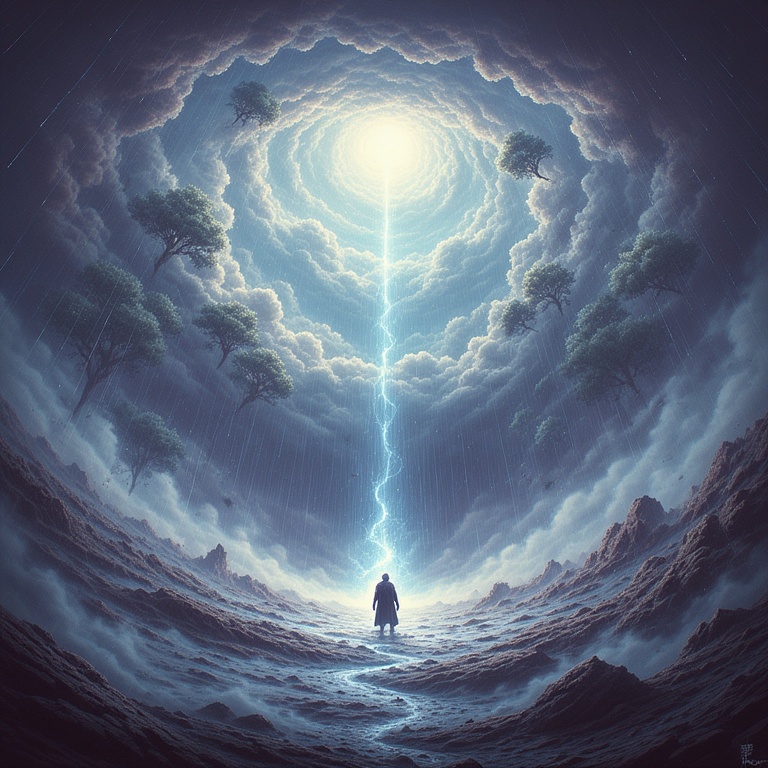
The fifth edition Dungeons & Dragons Dungeon Master’s Guide describes “The Shadowfell, also called the Plane of Shadow, is a dimension of black, gray, and white where most other color has been leached from everything. It is a place of darkness that hates the light, where the sky is a black vault with neither sun nor stars.” [Image courtesy Wizards of the Coast]
Areas with cloakers might contain:
-
Skeletons missing cloaks
-
Blood-stained hooks
-
Abandoned camps with intact packs but missing clothing
-
Ledges with dark “cloth” shapes
Let players realize too late.
3. Cloaker Territories
Cloakers may:
-
Claim ruined fortresses
-
Nest in abandoned halls
-
Live near trade routes
-
Haunt ancient armories
They don’t need lairs.
They need foot traffic.
How Players Can Engage With This Lore
1. New Dungeon Habits
Players may:
-
Poke hanging cloth
-
Burn tapestries
-
Avoid wearing loose cloaks
-
Toss rocks at suspicious shapes
The dungeon becomes interactive again.
2. Moral Ambiguity
Cloakers are not demonic.
They are animals.
Killing them isn’t heroic.
It’s pest control.
That tone shift matters.
3. Character Reactions
A survivor of a cloaker attack might:
-
Hate enclosed spaces
-
Refuse to wear cloaks
-
Panic when cloth touches their face
-
Sleep sitting up
Small scars build character depth.
Campaign Ideas Sparked by Cloakers
-
The Cloak Plague: Trade route plagued by “cursed cloaks”
-
Living Wardrobe: A noble house where the entire wardrobe is cloakers
-
The Cloth Cathedral: Abandoned temple full of hanging “drapes”
-
Evolution Gone Wrong: Wizards experimenting with cloaker breeding
Each leans into impersonation horror.
Why This Lore Is So Effective
Cloakers violate a core assumption:
Objects are safe.
Monsters are dangerous.
Furniture is not.
Until it is.
The Quiet Horror Beneath It All
Many monsters disguise themselves.
Cloakers do not disguise.
They are the disguise.
They didn’t learn magic.
They didn’t bargain with demons.
They simply evolved into something you are conditioned to trust.
And that might be the most unsettling thing of all.
Thanks for reading. Until Next Time, Stay Nerdy!!

No Comments